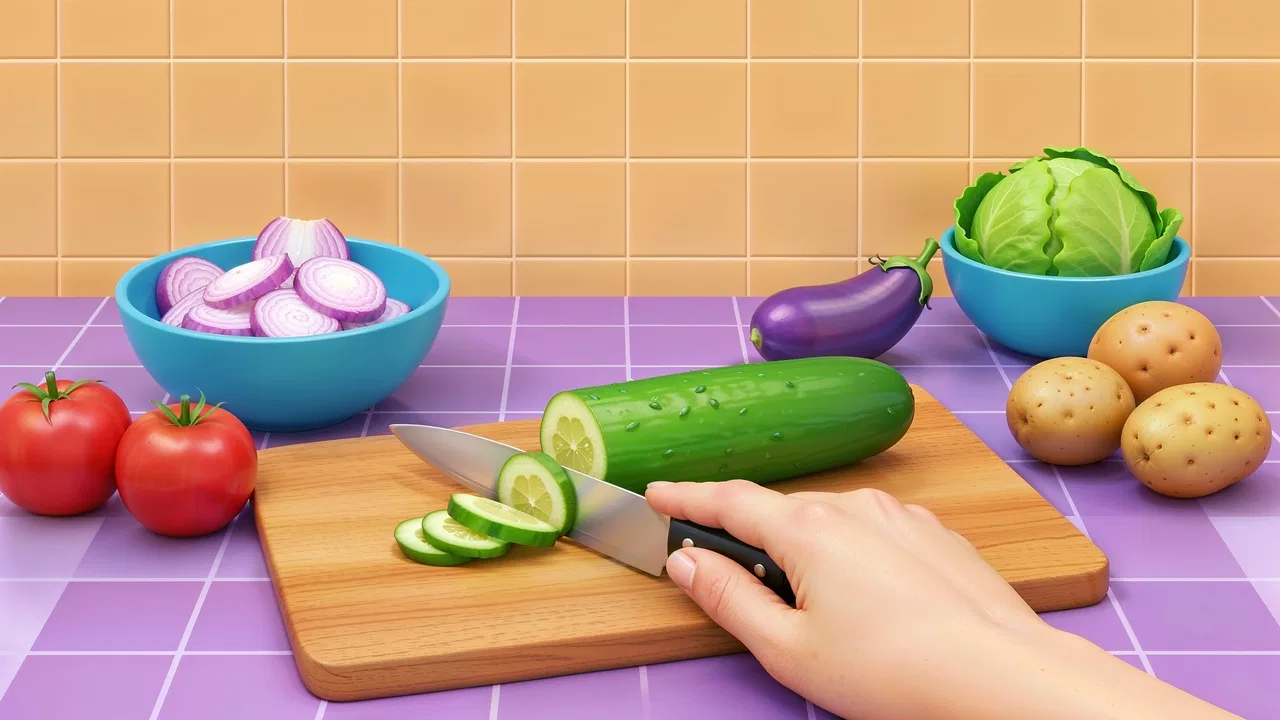
Kitchen Set - Cooking Games
- 3.6
- Rating
- 10.00M
- Installs
- Free
- Price

 Analysis by App-foxy
I approached Kitchen Set - Cooking Games as a small role-playing cooking game rather than as a serious recipe tool. Its appeal is easy to understand: you step into a playful kitchen setting, prepare desserts, and move through chef-style activities designed to be approachable. After spending time with it, I found that its strongest quality is its low-pressure theme. It is the sort of game I could hand to someone who wants a gentle distraction, especially if they enjoy food preparation but do not want a complicated management simulation.
The game comes from Game Flash Studio and is free to install. It has reached over five million installs, which suggests that its simple cooking concept has found a broad audience. Its average rating sits at around three and a half stars from roughly three and a half thousand ratings, so I would not describe it as universally loved. That feels fair to me: the basic idea is pleasant, but the experience is more limited than the bright cooking theme might initially suggest.
How the kitchen feels to use
I found that the kitchen’s familiar visual language is the real starting point: ingredients and utensils make the activity easier to approach than a menu-heavy role-playing game. That helps a newcomer understand the general task, though seeing an object clearly is only part of using it comfortably. Next, I’d pay attention to how the screen’s visual cues translate into touch actions.
You May Also Like

 Blood Strike: 2.5 Anniversary
Blood Strike’s Loadouts Turn Every Drop Into a Tactical Gamble
A close look at Blood Strike’s custom loadouts: how fast access to signature weapons reshapes its battle royale rhythm, rewards preparation, and narrows the gap between fights.

 Pandora - Music & Podcasts
Pandora’s Music Is Easy to Start, but Harder to Recover
Pandora’s strength is its low-effort path from a seed to a station. Its weak spot is how much confidence it asks you to place in connection, setup, and quiet recovery.

 8 Ball Pool
 Is Built on Rivalries, Rematches, and Routine
A close look at the rivalries, rematches, shared routines, and unanswered safety questions that turn a quick pool match into a persistent mobile community.

 Samsung Music
’s Quiet Strength Is Playing What You Already Own
Its reach comes less from spectacle than from dependable access to a personal library. That simplicity is both the app’s strongest retention engine and its ceiling.

 AccuWeather: Weather Radar
AccuWeather Review: A Quick, Clear Forecast for Everyday Decisions
For everyday plans, the best forecast is the one you can understand quickly. AccuWeather makes rain timing, radar, and local conditions easy to act on, with a few trade-offs.

 Hill Climb Racing
Why Hill Climb Racing Still Turns Crashes Into One More Run
A tiny car, a bumpy hill and one more upgrade: Hill Climb Racing keeps resurfacing because its simple chaos makes every near-miss feel personal.
More From Our News Desk



Readable navigation for a casual audience
The most important accessibility question for a game like this is whether a new player can understand what to do without studying instructions. In my experience, the cooking theme gives the interface an immediate advantage. Familiar objects such as ingredients, utensils, and finished desserts are easier to interpret than abstract icons. Someone who is new to mobile games can usually understand the general goal quickly because the setting explains itself.
That simplicity also makes the game suitable for short sessions. I did not feel that I needed to memorize a large set of rules before beginning. The kitchen setting creates a clear mental path: choose an activity, prepare something, and see the result. For children and casual players, that straightforward structure is more inviting than a role-playing game filled with menus, character statistics, and long tutorials.
Still, readable does not always mean effortless. A player with reduced vision may find small visual elements difficult if important actions depend on recognizing details in the kitchen scene. The game is built around seeing what is available and choosing the correct interaction, so visual clarity matters more here than it would in a text-heavy game. I would recommend trying the opening section before assuming that every control will be comfortable for a particular player.
One useful approach is to play in a quiet, well-lit environment and keep the device at a comfortable distance. That sounds basic, but it makes a noticeable difference in a visually focused cooking game. I also found that pausing between actions helps when the screen feels busy. Instead of tapping quickly through every prompt, I prefer to identify the next ingredient or tool first, then act. This reduces mistakes and makes the experience calmer for players who process visual information more slowly.
Motor demands and sensory comfort
Kitchen Set - Cooking Games is more approachable than a fast action game because its theme is domestic and familiar, but the touch controls still deserve attention. Cooking games often ask players to tap or drag objects in a particular order. That can be comfortable for someone with precise finger control, yet tiring or frustrating for a player with tremors, limited reach, or difficulty making repeated small movements.
I would not recommend treating it as a universally accessible game simply because the subject matter is friendly. A relaxed dessert theme does not remove the physical demands of touchscreen play. If a player struggles with accurate taps, the difference between selecting an ingredient and missing it can become the main challenge rather than the cooking itself. Playing with both hands, supporting the phone on a table, and taking breaks can make the session more manageable, although those are practical workarounds rather than built-in accessibility solutions.
Sensory comfort is another personal consideration. Bright food imagery and repeated touch feedback can be enjoyable for some players and distracting for others. The game works best for me when I want something visually cheerful, but I would choose a quieter title for someone who is sensitive to busy screens or repeated effects. Lowering the device volume is an easy way to make the experience less intense when sound becomes distracting, though the game’s enjoyment should not depend entirely on audio.
A helpful habit is to separate learning from speed. On the first attempt at an activity, I focus on understanding the order of actions rather than trying to move quickly. Once the sequence feels familiar, the same task becomes less demanding. This is a small but useful strategy for players who need extra time to coordinate taps or who become overwhelmed when several visual cues appear close together.
Playing in different everyday situations
The game fits naturally into short breaks. I can imagine playing it while waiting for an appointment, relaxing after school, or taking a few minutes away from a more demanding game. It does not require the emotional commitment of a long role-playing adventure, and the cooking theme makes it easy to return to without remembering an elaborate story.
For a family setting, the Everyone age rating is reassuring. It makes the title appropriate to consider for younger players, although adults should still judge whether the touch interactions and visual presentation suit the child using the device. The rating describes the intended content level, not whether every child will find the controls easy. A child who enjoys pretend cooking may connect with it immediately, while another may lose interest if the activities feel repetitive.
The minimum operating system is Android 6.0, so the game is available to people using older compatible Android devices. That is useful for families who do not replace phones frequently. At the same time, the practical experience can vary depending on the device’s screen size and responsiveness. A larger screen may make kitchen objects easier to distinguish, while a smaller phone can make fine tapping less comfortable. I would be especially cautious about recommending it for a player who already finds dense mobile interfaces difficult.
Because it is free to install, the easiest way to judge the fit is to try it without making an immediate purchase. The game includes in-app purchases priced at $0.99 per item. That is a small individual price, but younger players may not understand that optional purchases can add up. I would set up purchase restrictions before handing over the device. This is not only a budgeting tip; it also prevents the game’s accessibility from becoming tied to spending.
Where the design still creates barriers
The biggest barrier is the gap between a welcoming theme and the precision that touchscreen cooking can require. A player may understand every instruction but still struggle to complete it comfortably. That distinction matters when deciding whether to recommend the game to someone with motor limitations. I would describe it as visually approachable, not fully adaptable to different physical abilities.
Another limitation is that a simple cooking structure can become less engaging for players who want deep progression. In a more developed role-playing game, a player might adjust difficulty, customize controls, or find several ways to solve a challenge. Here, the attraction is the immediate kitchen activity. If someone needs extensive customization, text alternatives, adjustable timing, or a detailed control scheme, a conventional cooking simulator with stronger settings may be a better choice.
There is also a difference between playing alone and playing with guidance. A younger player may enjoy discovering the kitchen independently, but a parent or older sibling can make the first session smoother by explaining that mistakes are part of learning the sequence. I found that a short explanation at the beginning is more useful than constantly correcting every tap. It keeps the game playful instead of turning it into a test of accuracy.
Players who rely on audio cues should be cautious about making sound the main source of information. The core idea is visual, and I would approach it as a game that should be understood through what appears on the screen. Likewise, anyone who needs large text or strong contrast should inspect the interface personally before committing to longer sessions. I would rather be honest about that practical uncertainty than promise a level of support the game does not clearly demonstrate.
What makes it worthwhile despite those limits
The game’s strength is its low entry barrier at the level of subject matter. Cooking desserts is familiar, non-threatening, and easy to explain. I do not need to understand fantasy lore or competitive rules to enjoy the premise. That makes it a reasonable first step for someone who is curious about role-playing games but prefers everyday activities to battles or exploration.
It also offers a useful change of pace from management-heavy cooking games. Those alternatives often emphasize timers, restaurant expansion, staff decisions, or resource planning. Kitchen Set - Cooking Games feels more focused on the act of preparing food and the cheerful chef fantasy. If I want a calm, uncomplicated kitchen diversion, that focus is an advantage. If I want long-term strategy, optimization, or a demanding progression system, I would look elsewhere.
One practical tip is to treat each session as a small activity rather than expecting a complete game night. The title works better in that role. I would play it for a few minutes, stop when the visual repetition begins to feel tiring, and return later. That approach is particularly useful for players with limited concentration or anyone using mobile games as a brief relaxation tool.
Another insight is that the free entry point changes how I evaluate it. I do not expect the same depth I would demand from a premium role-playing game. Instead, I ask whether the basic kitchen loop is pleasant enough to revisit without pressure. For me, the answer is yes, but only when I want simplicity. The optional $0.99 purchases should be regarded as extras, not as a reason to install the game in the first place.
The current version is 3.7, and the game was released on December 30, 2024. Those details help place it as a relatively recent mobile title rather than an old classic with years of accumulated systems. I would keep expectations focused on its central cooking concept instead of expecting the breadth of a long-established role-playing series.
Who should try it, and who should skip it
I would recommend it to children who enjoy pretend kitchens, casual players who want a friendly food-themed distraction, and Android users with compatible devices who prefer free games before spending money. It may also suit someone exploring mobile role-playing games for the first time and looking for a familiar setting rather than a complex fantasy world.
I would be more hesitant for players who need extensive accessibility controls, have difficulty with precise touchscreen gestures, or become uncomfortable with visually busy activities. I would also skip it if my main goal were strategic restaurant management, a substantial story, competitive play, or deep character development. The category label may suggest a broader role-playing experience than the actual appeal provides; in practice, the kitchen theme is the reason to stay.
For a realistic everyday example, imagine a child using a family tablet after dinner while an adult is nearby. The child can explore the dessert-making idea, and the adult can help with unfamiliar gestures without turning the session into a formal lesson. Before that happens, I would check the device’s purchase settings, choose a comfortable brightness level, and make sure the child is not expected to play for too long. Those small preparations address the most likely problems more effectively than assuming the Everyone rating guarantees a perfect fit.
My inclusive verdict
After using it, I see Kitchen Set - Cooking Games as a cheerful, accessible-in-spirit cooking diversion rather than a fully adaptable game for every ability. Its familiar theme, free starting point, and modest role-playing presentation make it easy to recommend to casual players. The developer, Game Flash Studio, has chosen a concept that can welcome people who might avoid more intense mobile genres.
My recommendation comes with clear boundaries. The game is most inclusive when the player can comfortably see the kitchen scene, understand visual prompts, and perform repeated touch actions. Players who need larger controls, alternative input methods, adjustable timing, or stronger sensory customization may find the experience less comfortable. In those cases, a cooking game with explicit accessibility settings would be the better option.
For everyone else, I would give it a try without expecting a deep adventure. Its best use is as a short, friendly dessert-making escape, especially for younger players and people who enjoy simple chef activities. The key question is not whether the kitchen theme is appealing, but whether the player’s hands and eyes find the touch-based routine comfortable. If they do, this free role-playing game can provide an easygoing way to fill a few spare minutes. If they do not, the pleasant subject cannot fully compensate for the remaining control and readability barriers.
FAQs for Kitchen Set - Cooking Games
01What age group is Kitchen Set - Cooking Games suitable for?
Kitchen Set - Cooking Games is designed for users of all ages, particularly targeting children and young teens who enjoy cooking and kitchen-themed games. The app features colorful graphics and easy-to-follow instructions, making it accessible for younger players while providing engaging gameplay that can also be enjoyed by adults.
02Does Kitchen Set - Cooking Games require an internet connection?
No, Kitchen Set - Cooking Games can be played offline, making it a perfect choice for on-the-go entertainment without the need for a continuous internet connection. However, certain features, such as updates or additional downloadable content, may require internet access.
03Are there in-app purchases in Kitchen Set - Cooking Games?
Yes, Kitchen Set - Cooking Games includes in-app purchases. While the core game is free to download and play, additional levels, tools, or features may be available for purchase to enhance the gaming experience. It's advisable for parents to monitor or set restrictions for in-app purchases if children are using the app.
04What devices are compatible with Kitchen Set - Cooking Games?
Kitchen Set - Cooking Games is compatible with both Android and iOS devices. It is optimized for a wide range of smartphones and tablets, ensuring smooth gameplay across different platforms. Users should check the app's specific storage and software requirements to ensure compatibility with their device.
05How does Kitchen Set - Cooking Games ensure a safe environment for children?
Kitchen Set - Cooking Games is designed with child safety in mind. The app has no inappropriate content and includes parental controls to manage playtime and purchases. It adheres to privacy standards, ensuring that user data is protected and not shared with third parties.
Pros
- Engaging and colorful graphics.
- Wide variety of recipes to explore.
- Simple controls for all ages.
- Encourages creativity in cooking.
- Regular updates with new content.
Cons
- Contains in-app advertisements.
- Limited free features available.
- Might require internet connection.
- Some recipes can be repetitive.
- In-app purchases can be expensive.

Kitchen Set - Cooking Games
Gallery